Caring for the Spaces We Share: Spring Work Across Generations
Spring Work Across Generations
At Montessori Living in Kensington, Maryland, spring arrives not just with new growth, but with a shared sense of responsibility.
This week, that care was visible everywhere.
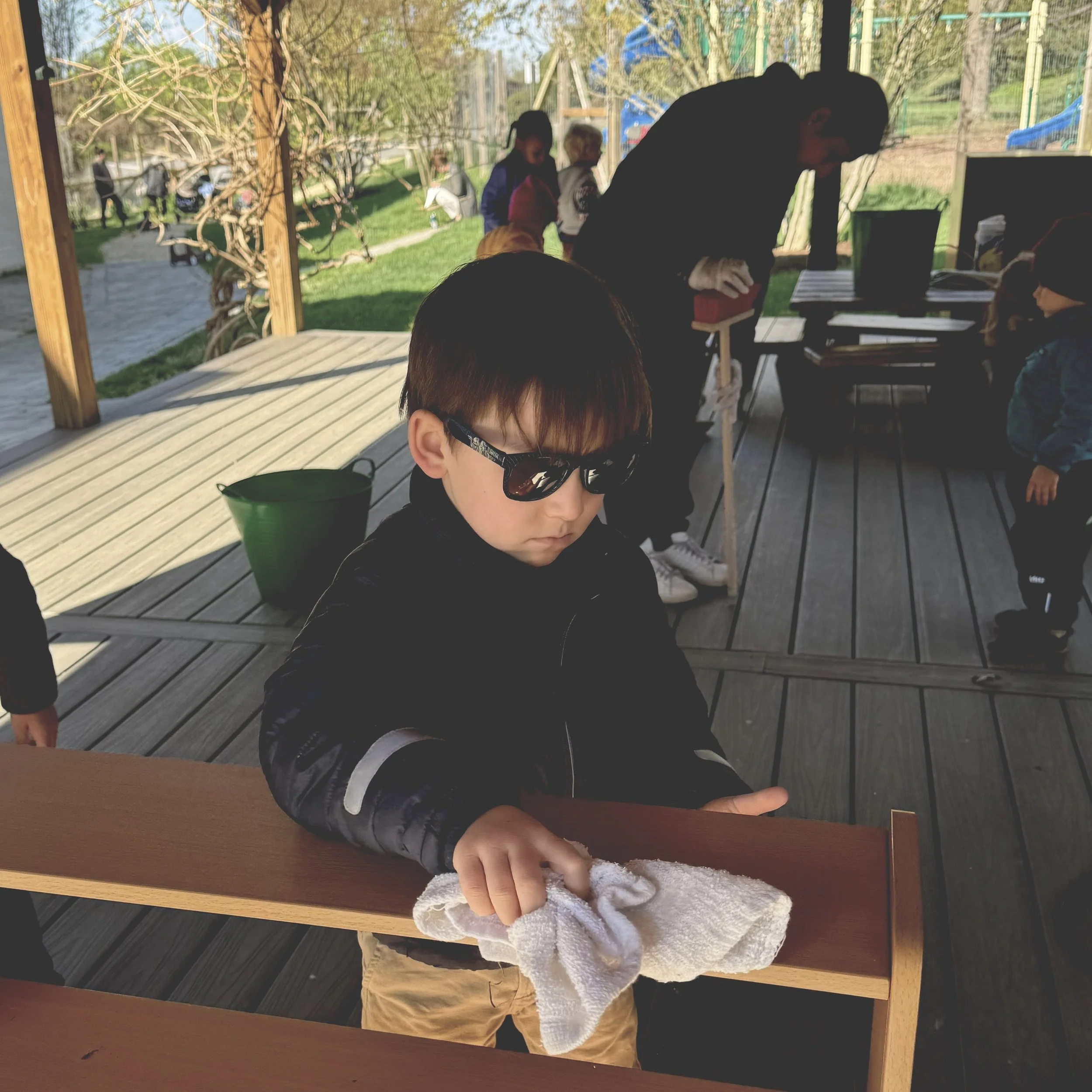
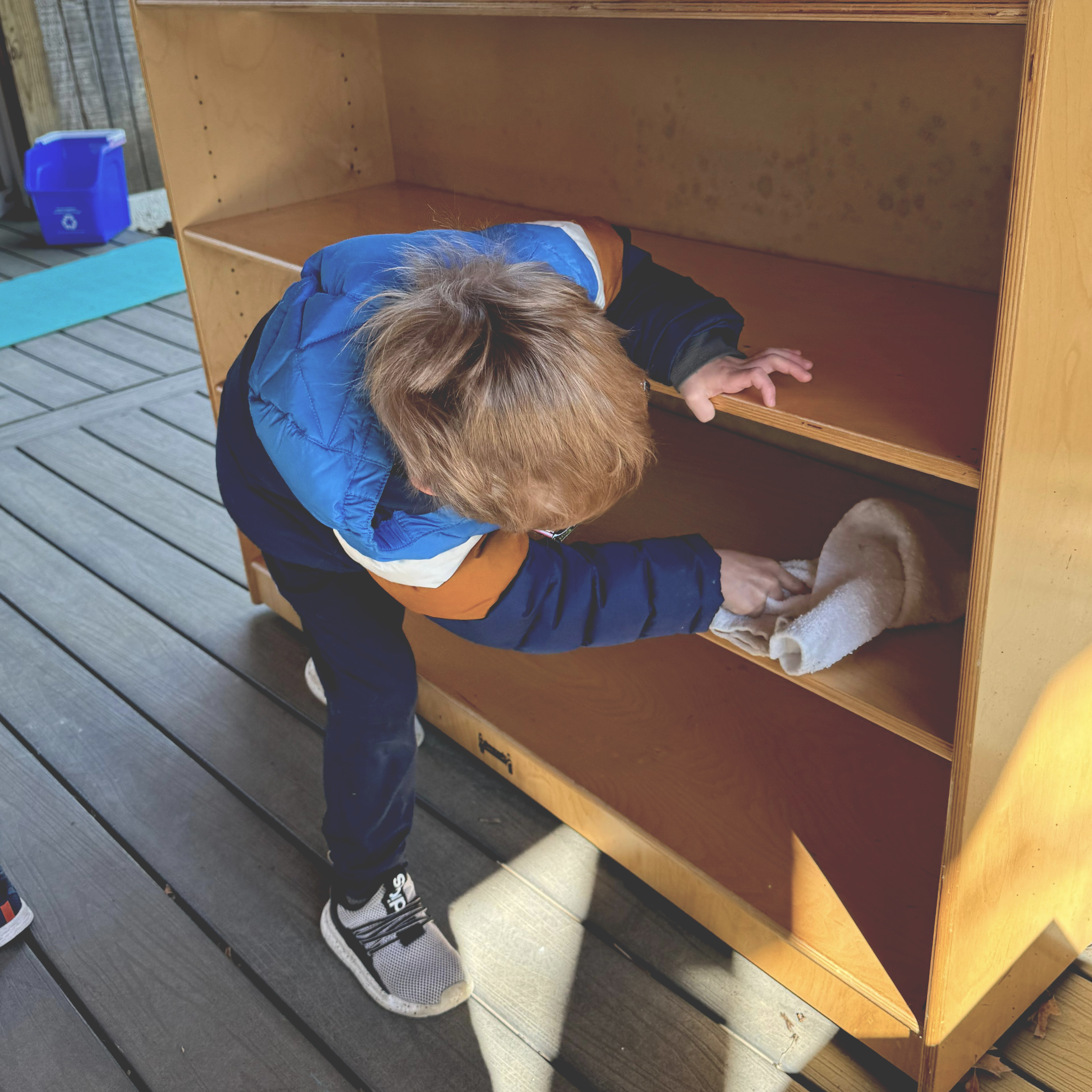
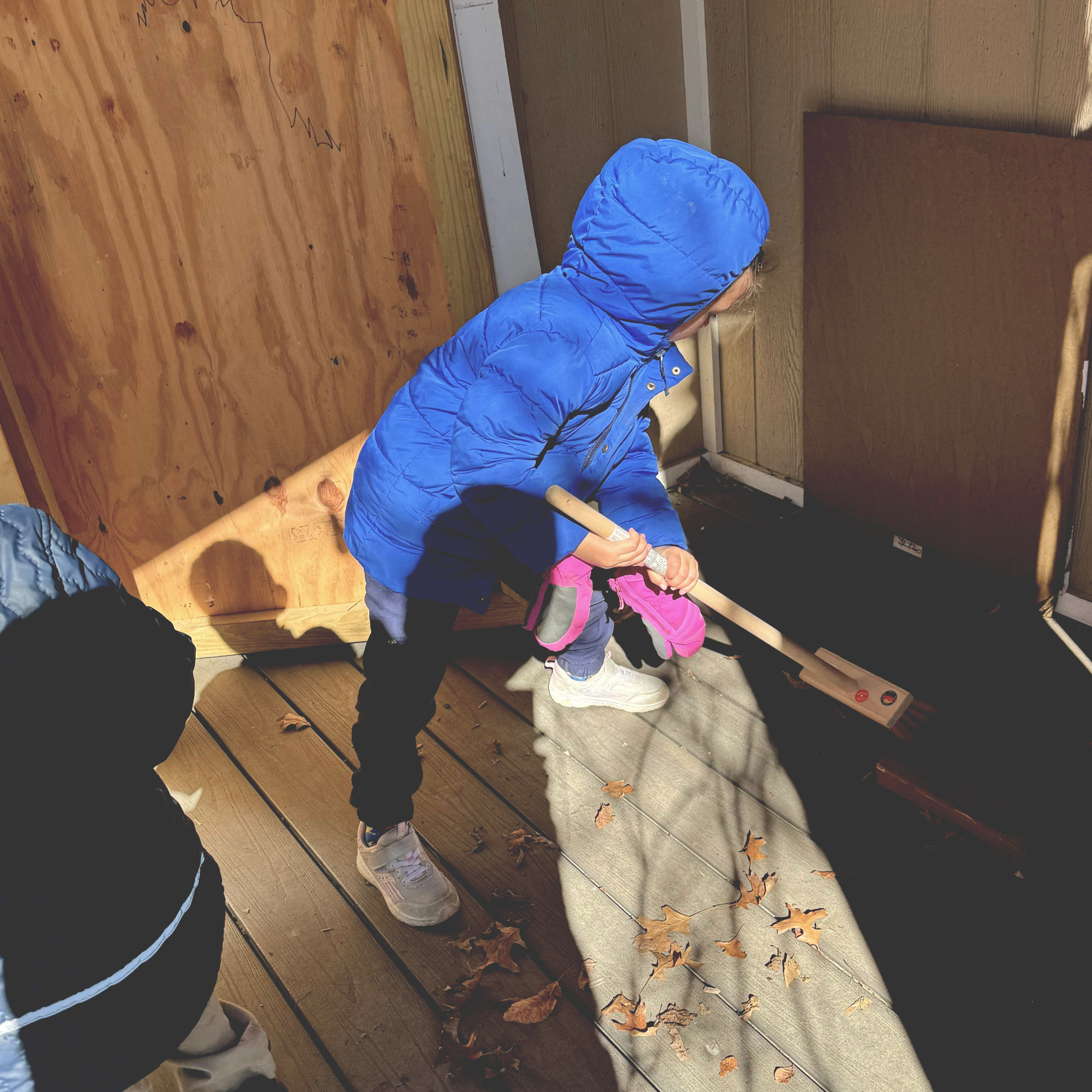
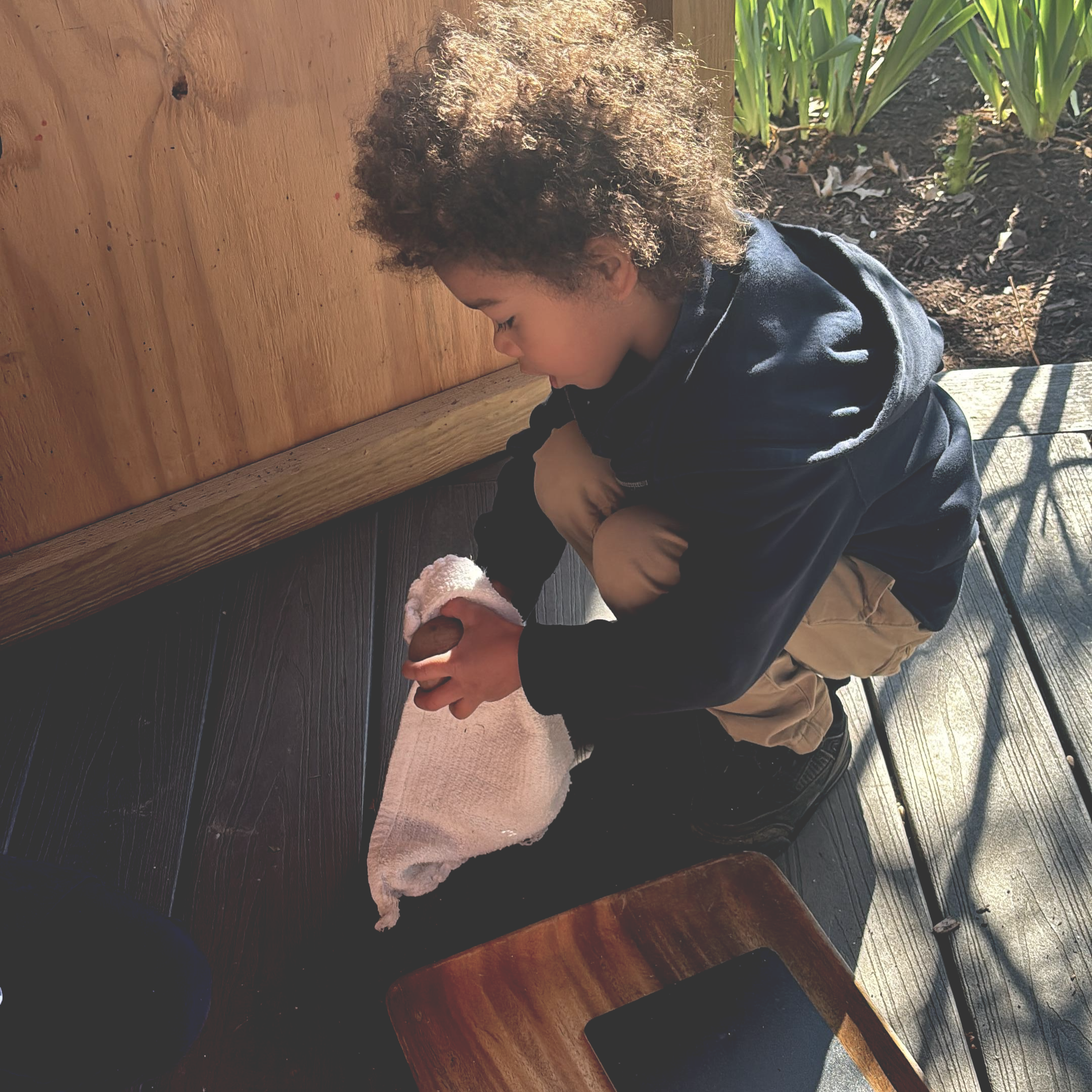
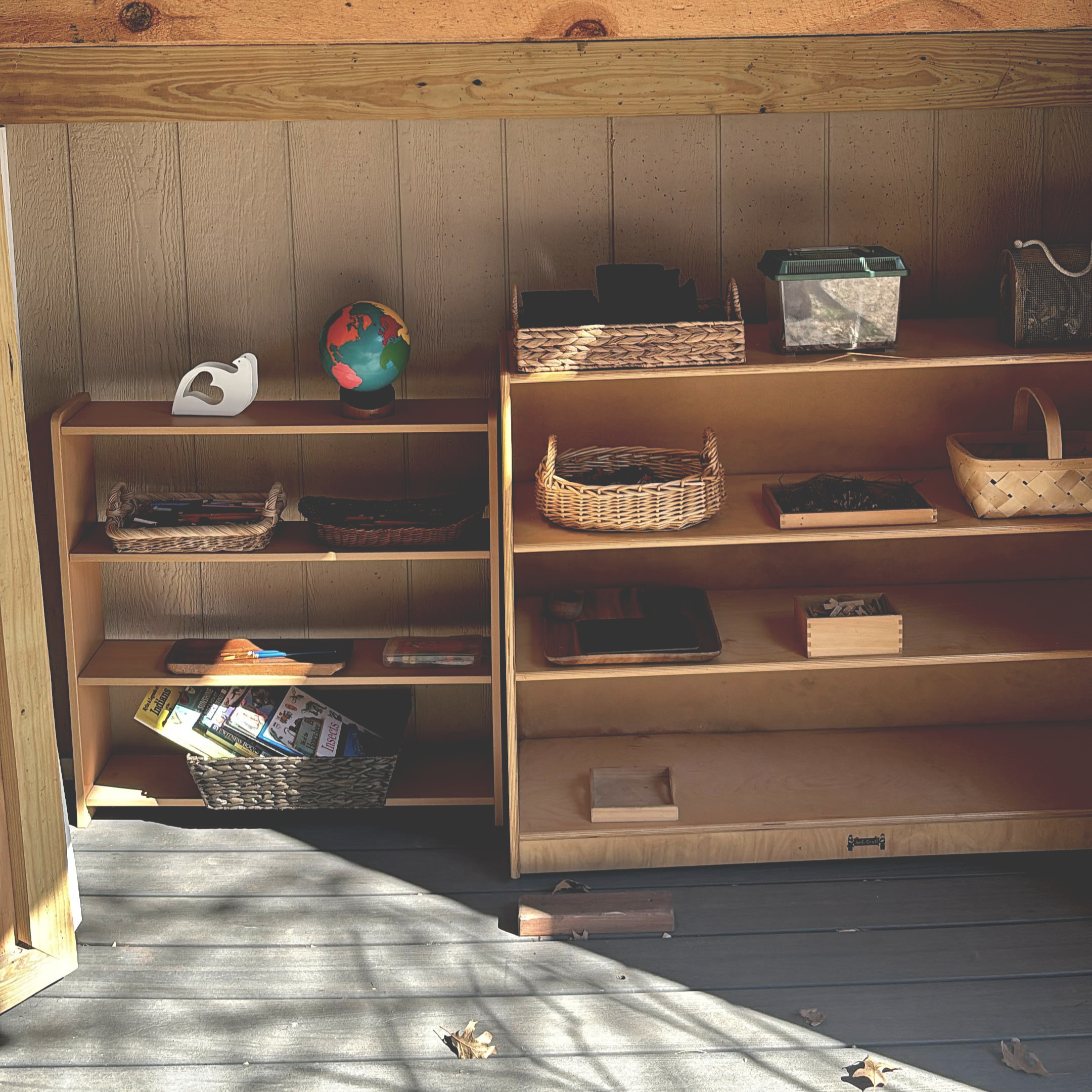
Cloths in hand, children wiped down shelves and tables. Materials were carried, sorted, and thoughtfully returned to their place. In our outdoor pavilions, classrooms in the open air, children worked alongside their guides to clean and organize the storage spaces that hold their Montessori materials.
These are not traditional classrooms. They are living environments, connected to the seasons, where learning moves fluidly between indoors and out.
And as spring begins, so does the work of preparing them.
Spring Cleaning as a Montessori Practice
In Montessori, this work is known as care of the environment.
It is not separate from learning.
It is learning.
Through hands on, purposeful activity, children come to understand that their environment is something they belong to. Something they are capable of maintaining. Something worthy of care.
This week, that understanding took shape in real ways.
Shelves were cleared and restored. Materials were handled with intention. Outdoor classroom spaces were refreshed and prepared for the season ahead.
They were not simply cleaning.
They were preparing the environment, for themselves, for one another, and for the children who will come after them.
From Pavilions to Garden Beds
Beyond the pavilions, the work continued in the gardens.
Children and guides moved together through the beds, pulling weeds, turning soil, and making space for new growth. Hands in the earth, they worked with focus and care, restoring balance to the environment around them.
This work connects directly to the rhythms of the natural world.
To notice what no longer serves.
To clear it away.
To make room for what is to come.
It is both practical and deeply symbolic.
An Intergenerational Rhythm of Care
At Montessori Living, this work is not carried by children alone.
Across the campus, adults tend to shared spaces. Residents notice changes in the seasons. Guides model care through their own actions. A fresh coat of paint appears in a common space. A path is cleared. A garden is restored.
Each generation contributing in its own way.
Each act of care building upon another.
This is what it means to live in an intergenerational community.
Care is not assigned.
It is shared.
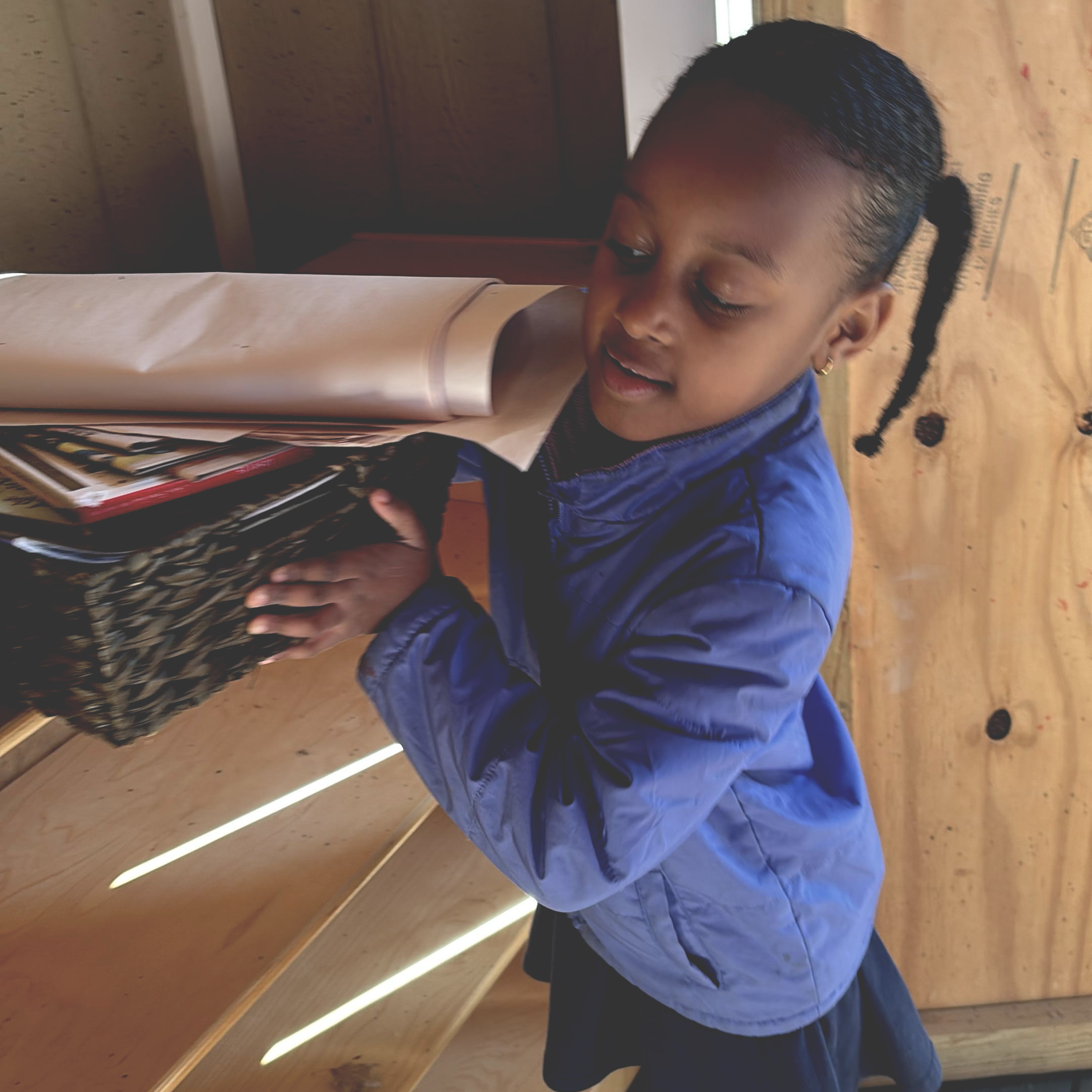
More Than Cleaning
What may appear as simple spring cleaning is, in truth, something much deeper.
Through this work, children experience:
Order
Responsibility
Pride in meaningful contribution
A sense of belonging within a larger community
They begin to understand that their actions matter.
That they can care for what surrounds them.
That they are part of something ongoing.
Preparing for What Comes Next
There is also a quiet awareness in this work.
As children grow and prepare to move into new environments, they leave behind spaces that are ready for those who will follow. Materials are cared for. Classrooms are restored. The environment is prepared with intention.
What they have used, they now care for.
What they have experienced, they now help sustain.
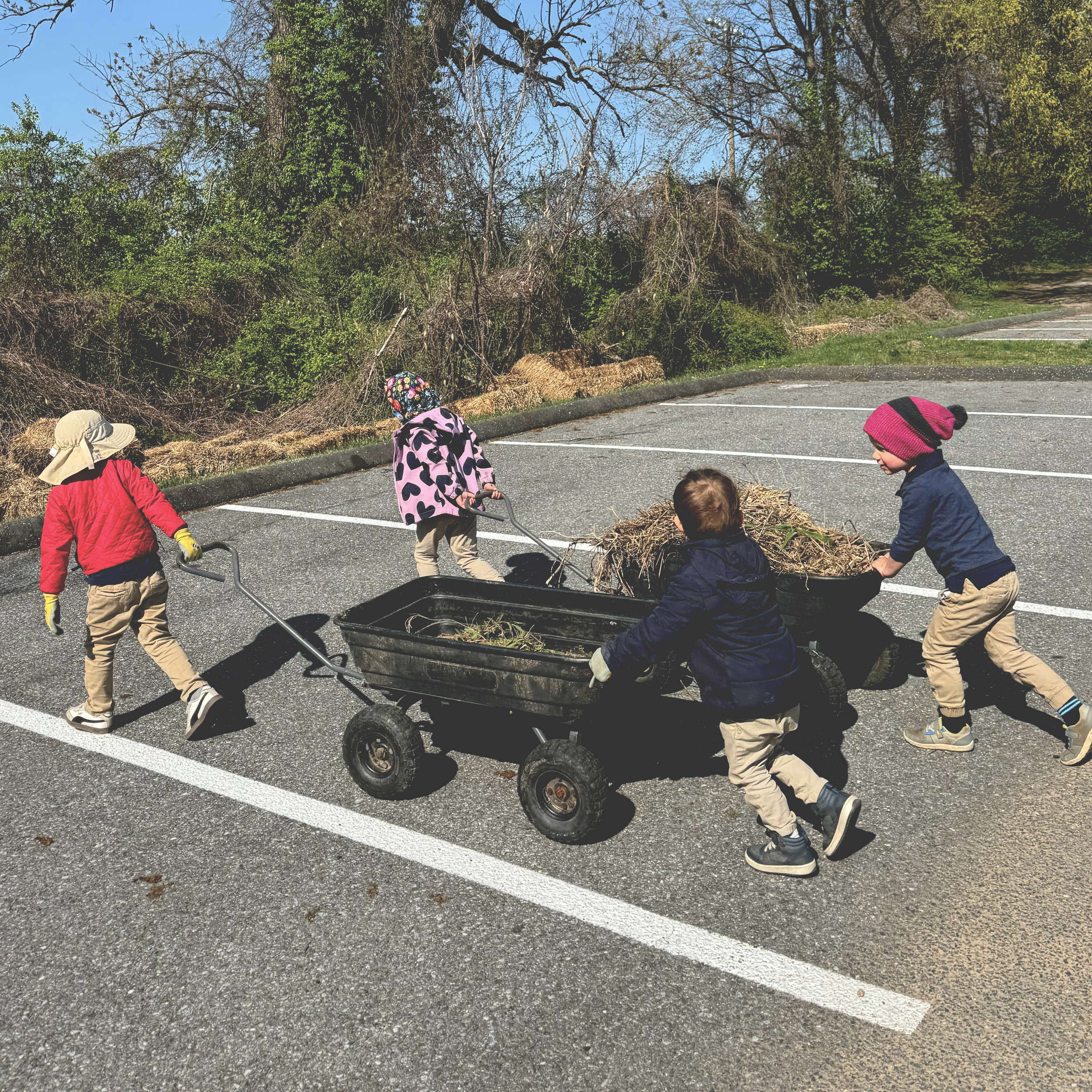
From Our Spaces to the Wider World
In Montessori, care of the environment begins close to home.
But it does not end there.
When children learn to care for their classrooms, their gardens, and their shared spaces, they begin to understand something larger.
They begin to understand how to care for the world.